To download this talk, right-click and select ‘save audio as’ or select the 3-dot menu to the right of the speaker icon.
When the generous lay supporter of the Buddha, Anathapindika, was ill near the end of his life, he was visited by the renowned monk Sariputta who offered him what was then considered an advanced training (for lay people anyway) on not clinging. In this talk, we will explore and discuss this teaching and compare it with some other teachings in a similar vein. You are welcome to read the sutta ahead of time (Majjhima Nikaya 143), although that is certainly not required.
https://sactoinsight.org/wp-content/uploads/2022/05/SIM-logo-trans.png00Sabitrehttps://sactoinsight.org/wp-content/uploads/2022/05/SIM-logo-trans.pngSabitre2021-03-04 22:00:002021-05-10 09:23:4803/04/2021 “Advice to Anathapindika on Not Clinging” with Walt Opie
To download this talk, right-click and select ‘save audio as’ or select the 3-dot menu to the right of the speaker icon.
Conceit (“māna” in Pali) has a special meaning in the Buddha’s teachings; it has a broader and more profound definition than “stuck up”… the definition we usually associate with this word. Conceit in Buddhism can mean feeling superior, inferior, or the same as others. In other words, it is our habitual comparison of ourselves to others. Conceit is also the delusion that our experiences ARE ourselves, and that our self has boundaries and solid substance. According to the Pali canon, conceit is among the last defilements to fall away before full awakening. It is subtle and difficult to observe within ourselves… much easier to see in others! When we begin to experience conceit as it really is, we also begin understand and experience anatta: “No permanent self”.
https://sactoinsight.org/wp-content/uploads/2022/05/SIM-logo-trans.png00Sabitrehttps://sactoinsight.org/wp-content/uploads/2022/05/SIM-logo-trans.pngSabitre2021-02-25 22:00:002021-03-04 09:16:1502/25/2021 “How Conceited are YOU?” with Diane Wilde
Experiencing Emptiness of Self and Its’ Practical, Every-Day Implications
To download this talk, right-click and select ‘save audio as’ or select the 3-dot menu to the right of the speaker icon.
Understanding and experiencing the teaching on the Emptiness-of-Self (“No-Self” / “Anatta”) is considered is to be defining and transformative. But having the actual experience that makes this teaching immediate, direct and relevant to every-day life and relationships seems to elude us. The focus of this Thursday night’s discussions will explore the Emptiness-of-Self through 4 questions:
Why is it considered so important from a practical perspective?
What is (and is not) the experience of Emptiness-of-Self?
What impact does the experience of Emptiness-Of-Self have on our understanding of ourselves, our relationships, our behavior and our place in the world?
What methods can help us understand and directly experience Emptiness-Of-Self in meditation and everyday life more often and more tangibly?
Community teacher, Rich Howard, gave an excellent traditional overview of the teaching on “no-self” or “anatta” on Thursday, February 4 under the topic of “Finding and Losing Yourself.” Dennis’ discussion this Thursday will be on the same teaching but from a different perspective and emphasis. Rich’s talk is posted to SIM’s Audio Dharma Library (click here). The subject matter of this evening is appropriate for all stages of practice. All that is necessary is showing up with an open, questioning mind.
https://sactoinsight.org/wp-content/uploads/2022/05/SIM-logo-trans.png00Sabitrehttps://sactoinsight.org/wp-content/uploads/2022/05/SIM-logo-trans.pngSabitre2021-02-18 22:00:002021-02-19 07:51:3202/18/2021 “Experiencing Emptiness of Self” with Dennis Warren
https://sactoinsight.org/wp-content/uploads/2022/05/SIM-logo-trans.png00Sabitrehttps://sactoinsight.org/wp-content/uploads/2022/05/SIM-logo-trans.pngSabitre2021-02-11 22:00:142021-02-16 09:23:5802/11/2021 “Reflection on Patience” with Gullu Singh
Who Am I? What Do I Want? What Do I Believe?: Finding and Losing Your Self
To download this talk, right-click and select ‘save audio as’ or select the 3-dot menu to the right of the speaker icon.
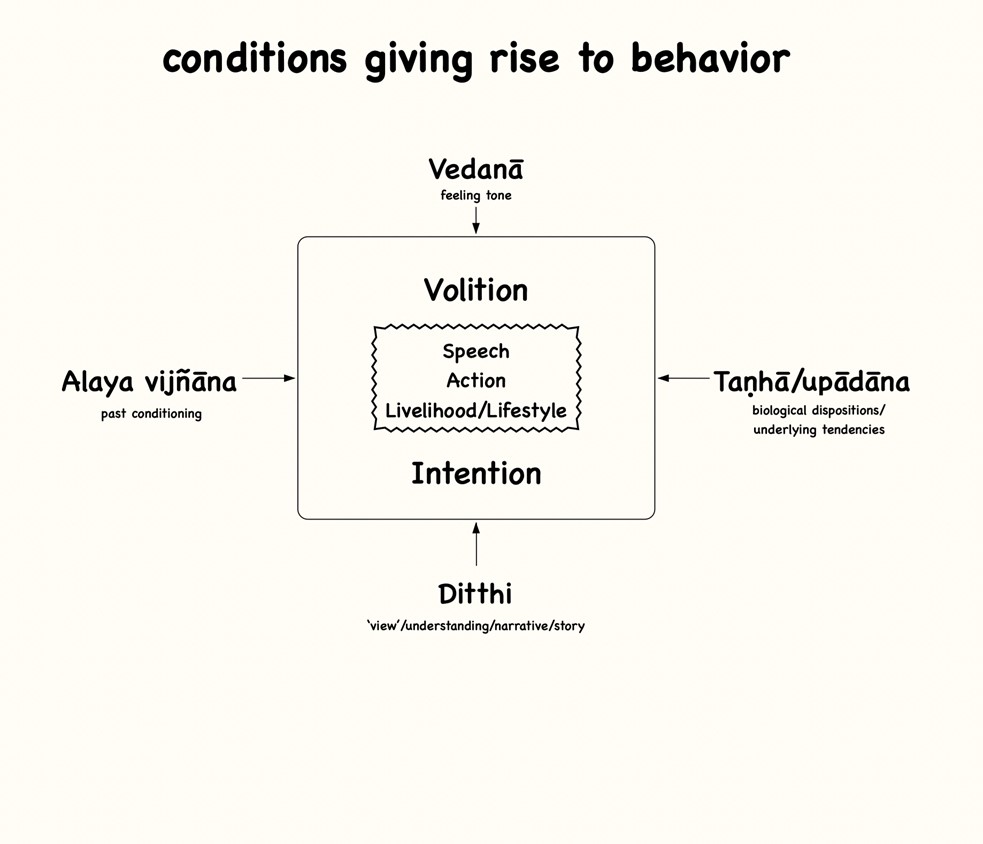
The Buddhist concept of “not self” can be very confusing if we let it linger as a subject of philosophical speculation or distant conceptual notion. On the other hand, the Buddha taught the illusion of self (anatta in Pali) as one of the three universal characteristics of experience, along with impermanence and unsatisfactoriness; living an embodied insight into how this process works is one avenue to awakening. Two of the basic processes we have taught often at SIM offer ways of seeing into how we construct and maintain the sense of self: the five aggregates of clinging and dependent origination. In this presentation, Rich will share some other approaches from classes he attended with Steve Armstrong and Kamala Masters at the Vipassana Metta Foundation and Jay Garfield at the Barre Center for Buddhist Studies. We will place particular emphasis on the ethical and liberating aspects of these teachings.
https://sactoinsight.org/wp-content/uploads/2022/05/SIM-logo-trans.png00Sabitrehttps://sactoinsight.org/wp-content/uploads/2022/05/SIM-logo-trans.pngSabitre2021-02-04 22:00:112021-02-06 14:58:1402/04/2021 “Finding and Losing Your Self” with Rich Howard
To download this talk, right-click and select ‘save audio as’ or select the 3-dot menu to the right of the speaker icon.
Greg Scharf uses a Jataka story (Javana Hamsa: The Swift Swan) as an introduction to a talk on insight into impermanence and its relationship to what the Buddha called “An Independent Abiding”.
https://sactoinsight.org/wp-content/uploads/2022/05/SIM-logo-trans.png00Sabitrehttps://sactoinsight.org/wp-content/uploads/2022/05/SIM-logo-trans.pngSabitre2021-01-28 22:00:002021-02-06 14:53:5901/28/2021 “Javana Hamsa: The Swift Swan” with Greg Scharf
To download this talk, right-click and select ‘save audio as’ or select the 3-dot menu to the right of the speaker icon.
Mindfulness is the operational centerpiece of good practice, sound problem solving and living well. It supports and enables all the different teachings, methods and psychology of the historical Buddha which are designed to help us live a rich, full, satisfying life. One way of understanding mindfulness is that it has two interlocking dimensions: One is practical and functional. The other is oriented towards awakening or liberation. As a community practitioner, we can inadvertently slip into the habit of relating to mindfulness, and practice itself, as only functional and practical. When this happens, mindfulness and practice can become self-restricting and self-limiting. Such an approach can accidently obscure, and potentially cut us off from, spontaneous discovery and the deep, intuitive, healing wisdom of our bodies and hearts. We can become disconnected from the beauty and power inherent in exploring the mystery, and the dilemma, of being human, of being in relationships and of being alive on this planet. This is the territory we’ll explore on Thursday evening: functional mindfulness; awakening or liberating mindfulness; and the unifying and inspiring experience at the center of practice which is beyond words, language and concepts. The subject matter of this evening is appropriate for all stages of practice. All that is necessary is showing up with an open, questioning mind.
https://sactoinsight.org/wp-content/uploads/2022/05/SIM-logo-trans.png00Sabitrehttps://sactoinsight.org/wp-content/uploads/2022/05/SIM-logo-trans.pngSabitre2021-01-21 22:00:352021-01-22 14:00:3501/21/2021 “Reconsidering Mindfulness” with Dennis Warren
To download this talk, right-click and select ‘save audio as’ or select the 3-dot menu to the right of the speaker icon.
* I think this was in Lion’s Roar Thubten Chodron: American Tibetan Buddhist nun, author, teacher, …My concern with Buddhism in the West is that there’s some block to really looking deeply at what dukkha means. People want light and love and bliss. Many people come to Buddhism to achieve a better psychological state and feel better about themselves, and that’s fine—we can help them on that level. But that’s not the depth to which the Buddha’s teachings go. If we don’t spend time considering what dukkha is, then we won’t seek liberation and awakening. Instead, we’ll use the dharma only to make our samsaric life a little bit better. That’s one of my fears for Buddhism in the West, that we lose the liberating aspect of the dharma. * www.accesstoinsight.org/tipitaka/kn/snp/snp.4.15.irel.html * www.heartmindteaching.com
To download this talk, right-click and select ‘save audio as’ or select the 3-dot menu to the right of the speaker icon.
As the days wane and the nights get longer, Rich will bring reflections on the “greatest blessings” from the Maha-Mangala Sutta (Sutta Nipata 2.4 translated by Narada Thera). This beloved sutta reminds us that, even in the midst of loss and grief, our ordinary lives contain so many sources of happiness. In balancing our awareness of suffering with the uplifting conditions in life, we come closer to seeing things as they are. This awareness provides a balance to our daily life practice and a motivation for skillful action in the world.
Rich last offered a reflection on this sutta four years ago, as we moved into the Sacramento Dharma Center. Now that we are not able to be there in person, let’s bring these blessings to mind again.
https://sactoinsight.org/wp-content/uploads/2022/05/SIM-logo-trans.png00Sabitrehttps://sactoinsight.org/wp-content/uploads/2022/05/SIM-logo-trans.pngSabitre2020-12-17 22:00:002020-12-18 08:45:5612/17/2020 “Finding Happiness: the Maha-Mangala Sutta” with Rich Howard